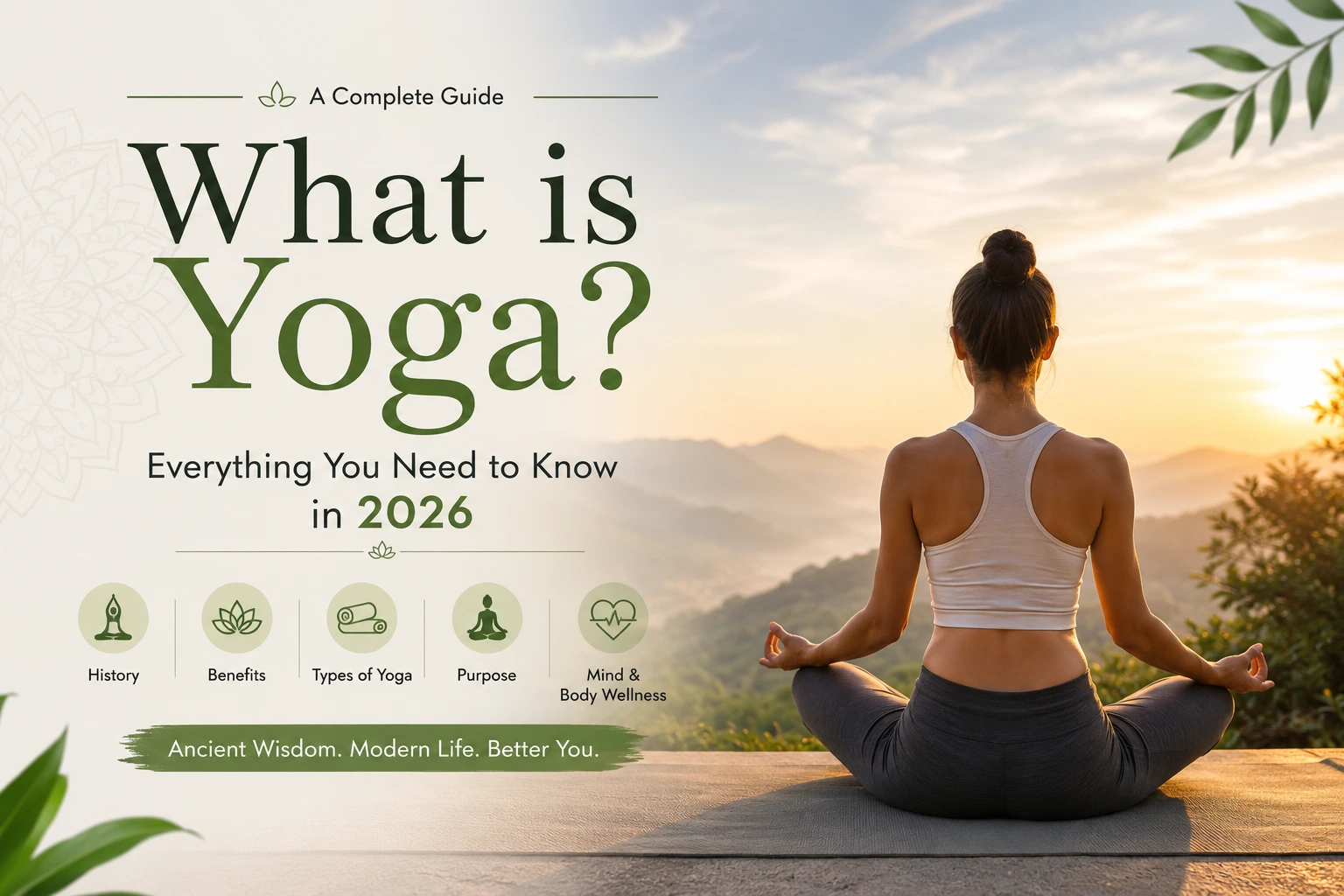
If you believe that yoga solely involves contorting your body into challenging poses, it’s time to reconsider. Yoga is much more than that. In simple words, yoga means taking care of your body, mind, and breath. It includes yoga poses (asanas), breathing exercises (pranayama), and meditation. When the body, mind, and breath work together in balance, that is when yoga truly happens.
Yoga is the study of life and your inner self. It helps you understand your body, breath, mind, memory, thoughts, and emotions better. Yoga is a practice that connects the body, mind, and spirit. It helps reduce stress, relax the mind, and bring peace to daily life.
The word “yoga” comes from the Sanskrit word “yuj,” which means “to unite” or “to connect.” Yoga is an ancient Indian practice that is more than 5,000 years old. One of the main teachings of yoga is to keep the mind calm and balanced in every situation. It also teaches us to do every action with full awareness and focus.
By learning the art of dropping the effort through yoga, one experiences the state of being in total alignment with infinity. Yoga can bring about complete balance in one’s personality. It holds out the promise of many solutions that today’s behavioral sciences are looking for. Yoga is the way for human potential to blossom to its fullest, a path to attain the highest goal of uniting with the infinity.
Gurudev Sri Sri Ravi Shankar
The Purpose of Yoga
Patanjali, one of the greatest teachers of yoga, said, “The purpose of yoga is to stop misery before it comes.” Negative emotions like greed, anger, jealousy, hatred, and frustration can affect our peace of mind. Through yoga, these emotions can be healed, managed, and transformed in a positive way.
There is also a famous saying, “Yogah Karmasu Kaushalam,” which means “yoga is skill in action and expression.” Yoga teaches us how to live life with balance, manage the mind, handle emotions, and build healthy relationships with others.
Everyone experiences love, but many times that love changes into anger or hatred. Yoga gives us the understanding and awareness to keep love pure and lasting. It teaches us how to stay calm, connected, and balanced in every situation.
A Brief History of Yoga
Yoga has deep roots in ancient Indian knowledge and tradition. In Vedic teachings, there are four main Vedas: Rigveda, Samaveda, Yajurveda, and Atharvaveda. These are followed by four Upavedas, or sub-Vedas: Ayurveda, Arthaveda, Dhanurveda, and Gandharvaveda.
There are also six important branches of knowledge known as the Upangas: Shiksha, Kalpa, Vyakarana, Nirukta, Chandas, and Jyotisha. These are further connected to six systems of Indian philosophy: Nyaya, Vaiseshika, Sankhya, Mimansa, Vedanta, and Yoga.
Yoga has been practiced for thousands of years. During the Indus-Saraswati civilization, which dates back to around 2700 BC, many seals and fossils were discovered showing figures in yoga postures and meditation poses. This shows that yoga was known and practiced even in the early stages of human civilization.
The Four Yogas
The science of yoga includes different paths that guide a person toward a balanced and meaningful life. These paths help develop the mind, body, emotions, and spirit. The four main paths of yoga are Gyan Yoga, Bhakti Yoga, Karma Yoga, and Raja Yoga.
Gyan Yoga

Gyan Yoga is the path of wisdom and self-knowledge. It helps a person understand their true self and brings clarity and purity to the mind through learning, awareness, and inner understanding.
Bhakti Yoga

Bhakti Yoga is the path of love and devotion. It is the practice of connecting with the Divine through prayer, faith, devotion, and surrender. This path fills the heart with peace, trust, and spiritual joy.
Karma Yoga

Karma Yoga is the path of action. It teaches us to give our best in every action without being attached to the results. Working with honesty, dedication, and selflessness helps a person grow spiritually and brings inner peace.
Raja Yoga

Raja Yoga is known as the path of mind control and self-discipline. It focuses on balancing the mind, body, and emotions through meditation and yoga practices. Raja Yoga is further divided into eight parts, and yoga asanas are an important part of this path.
The Benefits of Yoga
The benefits of yoga go far beyond physical fitness. Yoga helps improve your overall lifestyle and brings balance to the mind and body.
- Yoga helps improve your behavior and makes you more calm, friendly, and pleasant to be around.
- It brings relaxation, happiness, and a more creative and positive mindset.
- Yoga adds a natural smile to your face, even during stressful times.
- It supports both mental and physical health.
- Regular yoga practice improves focus, awareness, inner clarity, and peace of mind.
- Yoga helps reduce stress, anxiety, and negative thoughts.
- It increases energy levels and helps you feel more active and balanced in daily life.
With regular practice, yoga helps create a healthier, calmer, and more peaceful way of living.
What is yoga in simple words?
Yoga is a practice that helps connect the body, mind, and breath. It includes physical poses, breathing exercises, and meditation to improve overall well-being.
Can beginners do yoga?
Yes, yoga is suitable for beginners. Many simple yoga poses and breathing techniques are easy to learn and safe for people of all ages.
What are the main benefits of yoga?
Yoga helps improve flexibility, balance, strength, mental focus, relaxation, and overall health. It can also help reduce stress and improve sleep quality.
How often should I practice yoga?
Practicing yoga 3 to 5 times a week can provide good results. Even a few minutes of daily yoga can help improve physical and mental health.
Is yoga only for flexibility?
No, yoga is not only about flexibility. It also helps improve strength, posture, breathing, concentration, and emotional balance.
What is the best time to do yoga?
Morning is often considered the best time to practice yoga because the mind and body feel fresh. However, yoga can be practiced at any time that suits your routine.
Can yoga help reduce stress and anxiety?
Yes, yoga helps calm the mind through breathing exercises, meditation, and gentle body movements. Regular practice may help reduce stress and anxiety.
Do I need special equipment for yoga?
No, you only need comfortable clothing and a yoga mat to begin practicing yoga at home or in a class.
Can yoga help improve sleep?
Yes, relaxing yoga poses and breathing exercises may help calm the nervous system and improve sleep quality.
What is the difference between yoga and meditation?
Yoga includes body movements, breathing techniques, and meditation. Meditation mainly focuses on calming the mind and improving awareness.
Why is yoga important in daily life?
Yoga helps create balance in daily life by improving physical health, mental peace, emotional stability, and self-awareness.
1 thought on “What is Yoga? Everything You Need to Know in 2026”