
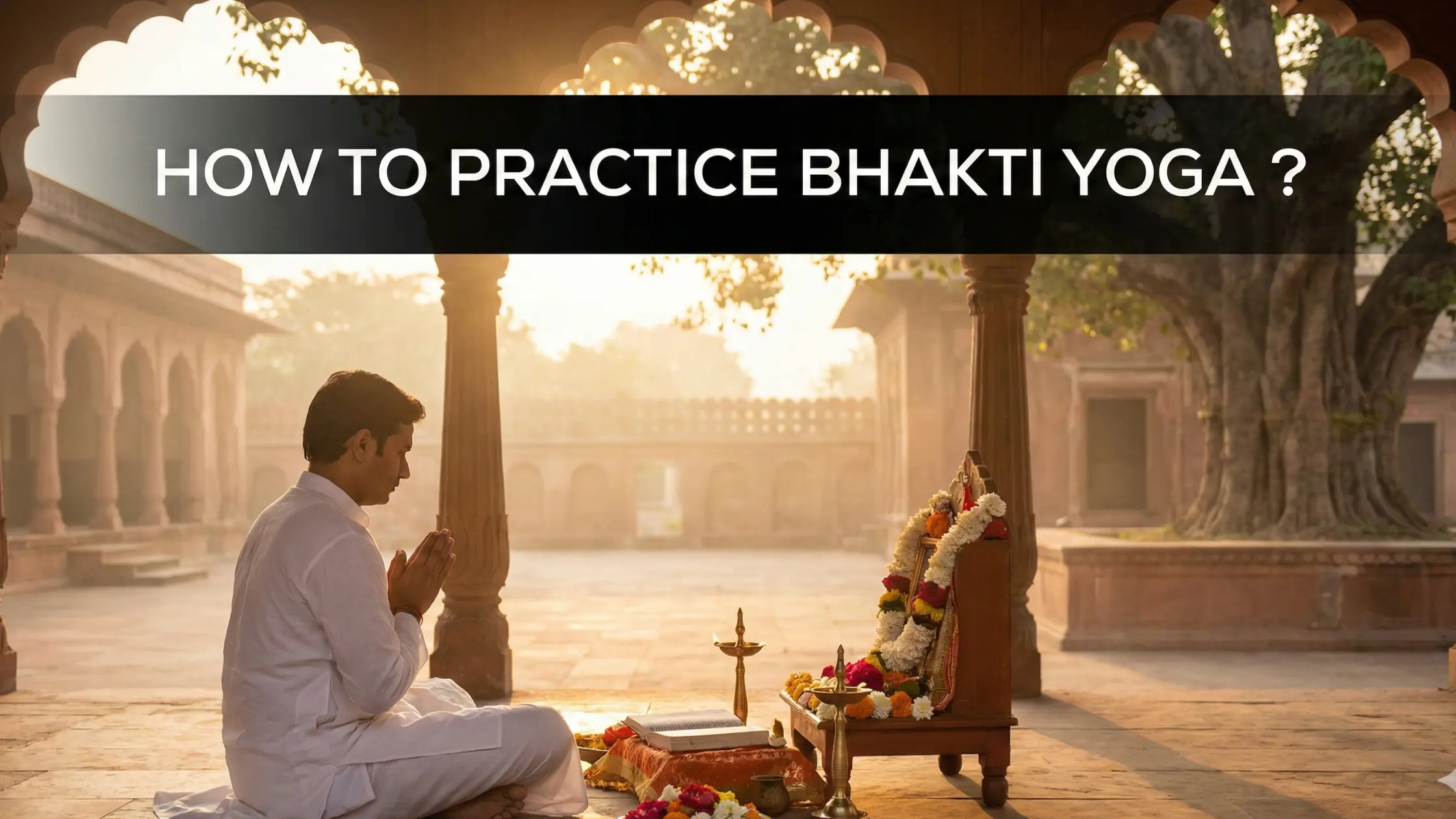
Bhakti Yoga is the path of devotion. It is one of the most heartfelt and gentle forms of yoga, focused on love, surrender, and connection with the divine. Unlike physical yoga practices, Bhakti Yoga is practiced mainly through the heart and emotions.
Many beginners feel drawn to Bhakti Yoga because it does not require physical flexibility or prior experience. Anyone can practice it, regardless of age or background. All that is needed is sincerity and openness.
Bhakti Yoga, often called the path of loving devotion, offers a profound and accessible spiritual practice focused entirely on cultivating a deep, heartfelt connection with the Divine. Unlike the rigorous physical postures of Hatha Yoga or the intense study of Jnana Yoga, Bhakti is a practice of the heart, emphasizing surrender, boundless love, and emotional engagement. It is an ideal starting point for anyone, irrespective of age, physical ability, or previous spiritual experience, as its only prerequisite is sincerity and a willingness to open the heart. Through practices like chanting (kirtan), prayer, meditation on the Divine, and selfless service, Bhakti Yoga gently guides the practitioner toward inner peace and liberation, making the divine connection a living, tangible reality in everyday life.
Also Read : How Long Does It Take to Become a Yoga Teacher?
What Is Bhakti Yoga ?
Bhakti Yoga is the yoga of love and devotion.
It is a spiritual path that focuses on forming a deep emotional connection with a chosen form of the divine. This could be God, a goddess, a spiritual ideal, or a higher truth. The aim is not perfection, but pure intention and faith.
In Bhakti Yoga, everyday actions become sacred when done with devotion. Singing prayers, offering flowers, lighting a lamp, or simply remembering the divine with love are all forms of Bhakti practice.
This path teaches surrender, humility, and trust. It gently shifts focus from the ego to something greater and more meaningful.
- Core Focus: It centers on cultivating a deep, emotional, and personal connection with a form of the divine.
- Object of Devotion: The “divine” can be chosen individually and may include:
- God (in any conceptual form)
- A goddess
- A spiritual ideal or teacher
- A universal, higher truth
- Goal and Intent: The practice emphasizes pure intention and sincere faith over the pursuit of spiritual perfection. The sincerity of the heart is paramount.
- Practice in Action (Sacredness of the Mundane): In Bhakti Yoga, all daily activities are transformed into sacred acts when performed with devotion. Examples of practice include:
- Singing or chanting prayers (Kirtan/Bhajan)
- Making offerings (e.g., flowers, incense, food)
- Ritual actions, such as lighting a lamp
- Simply remembering the divine with feelings of love and reverence
- Transformative Qualities: The path actively develops virtues and shifts consciousness by teaching:
- Surrender (Ishvara Pranidhana): Letting go of the need for personal control.
- Humility: Recognizing oneself as a small part of a greater whole.
- Trust (Faith): Relying on the divine will or higher power.
- Shift from Ego: Bhakti Yoga gently and effectively moves the practitioner’s attention away from the limitations and demands of the personal ego toward something transcendent, greater, and more profoundly meaningful.
Also Read : What Is the Most Difficult Yoga Pose? Hardest Yoga Poses Explained
Who Can Practice Bhakti Yoga ?
Bhakti Yoga is open to everyone.
You do not need to be religious, highly spiritual, or knowledgeable about scriptures to begin. Bhakti Yoga accepts beginners exactly as they are, without judgment or rules that feel heavy.
People who feel emotionally connected, sensitive, or expressive often find Bhakti Yoga very natural. It is also suitable for those who struggle with meditation or physical yoga, as devotion becomes the main practice.
What matters most is consistency and honesty of feeling, not ritual perfection.Bhakti Yoga is open to everyone.
- You don’t need to be religious, highly spiritual, or scripture-knowledgeable to start.
- It accepts beginners as they are, without judgment or heavy rules.
- It is often natural for those who are emotionally connected, sensitive, or expressive.
- It suits people who struggle with meditation or physical yoga, as devotion is the main practice.
- Consistency and honesty of feeling matter most, not ritual perfection.
Choosing Your Focus of Devotion
Bhakti Yoga begins with choosing a focus for devotion.
This focus can be a deity, a form of God, a spiritual teacher, nature, or even a universal idea such as compassion or truth. There is no right or wrong choice, only what feels genuine to you.
Having a clear focus helps the mind settle and gives direction to emotions. Over time, this relationship deepens and becomes a source of comfort and strength.
Beginners should choose something that naturally brings peace, trust, and love rather than fear or pressure.
Daily Practices in Bhakti Yoga
Bhakti Yoga is practiced through simple daily actions.
Common practices include prayer, chanting, singing devotional songs, reading spiritual texts, or sitting quietly with loving thoughts. These practices do not need to be long or complex.
What makes them meaningful is the feeling behind them. Even a few minutes of sincere devotion is more powerful than long rituals done without presence.
With time, these practices become part of daily life rather than something separate.
The Role of Chanting and Prayer
Chanting and prayer are central to Bhakti Yoga.
Chanting sacred names or mantras helps calm the mind and open the heart. The repetition creates rhythm and focus, allowing emotions to flow naturally.
Prayer in Bhakti Yoga is not about asking for things. It is about expressing gratitude, surrender, and connection. It can be spoken aloud or felt silently.Beginners can start with simple chants or heartfelt words that feel natural.The following playlists can be helpful for beginners who want to start practising Bhakti Yoga.
- Bhakti Bhajan Mantra Official Playlist offers a calm mix of bhajans, mantras, and aartis suitable for daily Bhakti Yoga practice, chanting, and meditation https://www.youtube.com/playlist?list=PLJiox_4CQz8c_E0lK9BSZO4ZEEA2xLtY_
- Shemaroo Bhakti features traditional devotional songs, kirtans, and long playlists ideal for prayer, pooja, and spiritual listening https://www.youtube.com/user/bhaktisongs
- Bhakti Marga Music provides soulful kirtans and devotional chanting sessions that support deep focus and emotional connection https://www.youtube.com/channel/UCRA5DC4xf7slRF8W7taZ-fQ
- Spiritual Mantra Channel includes mantra chanting and devotional music useful for morning prayers and meditation https://www.youtube.com/channel/UCaF3MVnBYNnjAKF16k3mUjw
- Swami Vivekananda Bhakti Yoga Talks help understand the philosophy behind Bhakti Yoga while supporting personal spiritual growth https://www.youtube.com/watch?v=Ity3MQvHpIc
Bhakti Yoga is not limited to temples or prayer rooms.
Everyday actions like cooking, cleaning, working, or caring for others can become Bhakti Yoga when done with devotion and awareness. Offering actions to the divine transforms ordinary life into spiritual practice.This approach reduces stress and brings meaning to routine activities. Life feels less rushed and more purposeful.
For beginners, this is one of the most beautiful aspects of Bhakti Yoga.
Also Read : 25 Yoga Inspirational Quotes for Daily Motivation
Emotional Healing Through Bhakti Yoga
Bhakti Yoga gently heals emotions.
Through devotion, feelings like fear, anger, sadness, and loneliness slowly soften. Love and surrender create space for emotional release and acceptance.Many people experience comfort and peace through regular Bhakti practice, especially during difficult times. It offers emotional support without suppression.This healing happens naturally and does not require force or control.
Advantages of Bhakti Yoga :
- Gentle Emotional Healing: Bhakti Yoga gently soothes and heals turbulent emotions.
- Softens Negative Feelings: Through devotion and surrender, feelings such as fear, anger, sadness, and loneliness are gradually softened.
- Facilitates Emotional Release: Love and surrender create a safe internal space that allows for natural emotional release and acceptance, rather than suppression.
- Source of Comfort and Peace: Regular practice provides a deep sense of comfort and peace, offering emotional support, particularly during challenging periods.
- Natural Process: The emotional healing is a natural process that unfolds without the need for force or rigid control.
Conclusion
Bhakti Yoga is a path of the heart.
It teaches love, surrender, patience, and trust. There is no pressure to achieve anything or become someone else. The practice itself is the destination.
For beginners, Bhakti Yoga offers comfort and simplicity in a busy world. It gently reminds us that devotion can exist in every moment.We through faith, remembrance, and emotional connection. Instead of controlling the mind or body, Bhakti Yoga invites you to soften and open your heart.
In traditional texts, Bhakti Yoga is described as offering everything you do to the divine. This includes thoughts, actions, emotions, and intentions. Even ordinary activities become sacred when done with devotion.
Bhakti Yoga teaches that love is the highest form of spiritual practice.
Remember : “In bhakti, even silence becomes a prayer.”Do visit Yoga Shala Wellness for more such insights and useful information.