
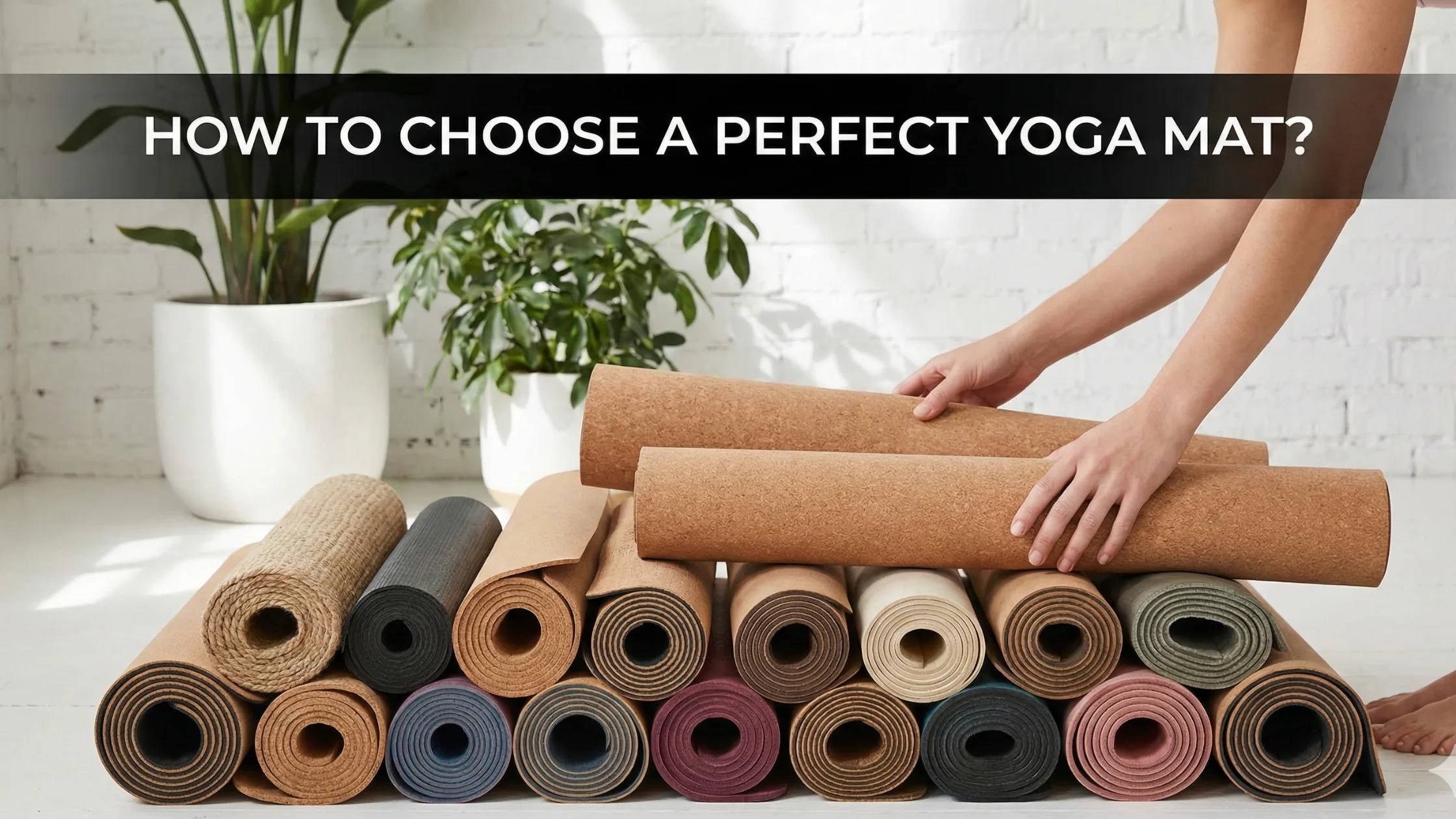
Yoga is a transformative practice that unites mind, body, and spirit. It doesn’t require a gym full of equipment or a complex setup. Your most important piece of gear is your yoga mat – a sacred space that supports your balance, cushions your joints, and provides a stable foundation for every pose.
For beginners, the universe of yoga mats can be overwhelming. One quick search unearths a dizzying variety of choices, each touting the ultimate grip, a perfect thickness, and unbeatable endurance. But what really matters? This tutorial will demystify the experience, allowing you to discover a mat that not only suits your purposes but also elevates your entire yoga experience.
Perfect yoga mat
Consider your yoga mat as your own sanctuary. It is the single piece of equipment that demarcates your practice area, providing a clean and stable surface. Without it, you might slip on a slippery floor or injure your joints on a hard floor.
A good quality mat gives:
- Stability and Grip: The main job of a mat is to keep you from slipping in Downward-Facing Dog and other poses. Good grip means you can concentrate on your alignment and breathing, not on how long you can stay standing.
- Cushioning and Joint Protection: Kneeling, balancing on your hands, and lying on the ground all involve support. Proper thickness cushioning shields your knees, wrists, and spine from pain, making practice more enjoyable and sustainable.
- A Personal, Hygienic Space: Studios sometimes include shared mats, but a personal mat guarantees a clean space uninfected with other people’s sweat and germs. It’s an investment in your health.
Also read : https://yogashalawellness.com/21-basic-yoga-poses-for-beginners/
Thickness
Its thickness is the most obvious characteristic of any mat. The choice is up to you, based on your body’s requirements and your style of yoga.
- Thin Mats (1/16 inch or ~2mm): These are the traveler’s best friend. Light and foldable, they pack easily in luggage. Although they provide a firm connection to the ground, they have minimal cushion. This makes them perfect for experienced yogis who value a direct feel and a light pack.
- Standard Mats (1/8 inch or ~3mm): This is the most widely used and versatile choice. It finds a perfect middle ground, offering enough cushioning for joint protection without sacrificing stability. It’s the favorite for dynamic, flow-based practices such as Vinyasa, Ashtanga, and Power Yoga, where solid contact to the ground is needed to facilitate speedy transitions.
- Thick Mats (1/4 inch or ~6mm+): If comfort is your top priority, look for a thicker mat. These are a dream for restorative yoga, Yin yoga, or any practice with longer holds. They offer maximum cushioning, making them a lifeline for sensitive knees, wrists, and a sore back. The only trade-off? They can make balancing poses slightly more challenging and are heavier to transport.
Pro Tip: If in doubt, a generic 1/8-inch mat is a sure bet. It’s an ideal all-rounder for trying various yoga styles.
Material
Material defines how a mat performs, feels, lasts, and affects the environment. Knowing the advantages and disadvantages of each is essential.
PVC (Polyvinyl Chloride)
- Pros: Extremely long-lasting, simple to clean, and offers a good grip on the floor. It’s usually the cheapest option, so great for beginners.
- Cons: Not environmentally friendly and has a possible chemical odor at first. It can get extremely slippery when wet with perspiration, and many people need to use a yoga towel.
- Best for: Beginners, budget-conscious individuals, and those who don’t want to fuss over a high-maintenance, long-term mat.
Also read : https://yogashalawellness.com/how-long-should-a-yoga-session-be/
TPE (Thermoplastic Elastomer)
- Pros: Lighter and greener than PVC (biodegradable and recyclable). Provides a soft, nice feel with reasonable cushioning and acceptable grip.
- Cons: Generally less long-lasting than PVC or natural rubber and can wear more rapidly with heavy, everyday use.
- Best for: Environmentally friendly people, users requiring a lightweight travel mat, and individuals looking for some balance between sustainability and performance.
Natural Rubber
- Pros: Ultra, unbeatable grip, even during sweat-prone situations. It’s biodegradable and synthetic chemical-free.
- Cons: Thicker than other mats, tends to have a strong rubbery odor (which dissipates over time), and isn’t ideal for those with latex allergies. It tends to break down faster when exposed to direct sunlight.
- Best for: Hot yoga enthusiasts, seasoned yogis who require maximum grip, and those dedicated to the all-natural lifestyle.
Jute and Cotton
- Pros: Extremely sustainable and porous, so perfect for hot yoga. Jute offers a textured surface for that extra grip.
- Cons: Provide little cushioning and can be harsh on sensitive knees.
- Best for: Hot yoga, classical yoga, and yogis who like a firm, earthy sensation.
Texture and Grip
The most important performance characteristic of a mat is its grip. It’s an attribute of both the material and the surface texture.
CELL-TYPE
- Closed-Cell Mats: They are not porous and easy to clean. They don’t soak up sweat, so moisture beads on the surface. Although hygienic, it can cause the mat to be slippery during a hot practice.
- Open-Cell Mats: They are built with small pores that soak up moisture, which gives them great traction in sweatier situations. Hence why they’re a favorite among those who practice hot yoga. The catch is that they are more susceptible to dirt and bacteria absorption and need to be cleaned more often, more thoroughly.
Surface Texture:
Certain mats are utterly flat and smooth, while others may be ribbed, bumpy, or even have patterns. A surface texture offers extra traction, which is well worth it for stabilizing one foot or maintaining a pose when one’s hands are slippery with sweat.
Note : If you’re a heavy sweater, try an open-cell mat or a closed-cell mat with a yoga towel. Most yogis find a mix of both is the ideal answer for a non-slip practice.
Also read : https://yogashalawellness.com/is-yin-yoga-a-waste-of-time/
Weight and Portability
The weight of your mat is most important if you intend to take it out of your home.
Travel Mats (2-3 lbs): Slim, light, and foldable, which is great for business travelers or anyone who needs a mat that’s compact enough to pack into a suitcase or backpack.
- Standard Mats (4-5 lbs): Typical weight, rugged enough for regular use and easy to take back and forth to a nearby studio.
- Studio Mats (6+ lbs): Heavy-duty, heavily cushioned mats ideal for home use or a short commute. They are stable due to their weight but may be too heavy for long commutes.
Mat Dimensions
Most mats measure a standard 68 inches by 24 inches, but this may not be a universal fit.
- Standard Size: This classic dimension is generally perfect for the average individual. If you are around 5 feet 8 inches or shorter, and have an average build, a standard mat will likely provide ample space for most yoga postures, allowing you to move freely without your hands or feet slipping off the mat during common poses.
- Extra Long/Wide Mats: For those who are taller than 6 feet or have a larger build, a standard mat will undoubtedly feel too cramped and restrictive. The constant need to adjust your position to stay on the mat can disrupt your flow and focus. In such cases, opting for an extra-long or extra-wide mat becomes essential. Mats measuring 72 inches or even 84 inches in length are specifically designed to accommodate taller practitioners, ensuring that your hands and feet remain on the mat in poses like Downward-Facing Dog, Plank, or any other pose requiring full extension.
Similarly, an extra-wide mat (typically 26-30 inches) provides additional lateral space, which can be particularly beneficial for individuals with broader shoulders or those who prefer more room to spread out. This extra real estate allows you the freedom and room you require to fully extend, deepen your stretches, and maintain proper alignment without feeling confined, ultimately enhancing your yoga experience.
Price and Budget
Yoga mats come in prices ranging from affordable ($20-$40) to premium, high-end ones ($100+).
- Budget Mats: These are created using fundamental PVC and are perfect for beginners who will try without making a huge investment.
- Mid-Range Mats ($50-$80): At this price range, you can find an excellent balance of features, durability, and quality. Good quality TPE and introductory natural rubber mats fall in this category.
- Premium Mats ($100+): They are crafted from high-quality materials with cutting-edge design elements. Though an investment, they are designed to stand up to years of regular use and deliver optimum grip and comfort.
In the end, a quality mat is well worth the cost. It is paid for through increased comfort, safety, and inspiration.
Also read : https://yogashalawellness.com/how-many-yoga-positions-are-there/
MAT CARE
Just like any piece of good gear, your mat requires maintenance to function at its optimum and last for decades.
- Clean Often: Wipe down the mat after every session to eliminate oils and sweat. Apply a mat cleaner or simply use a homemade solution of water, white vinegar, and some tea tree oil drops.
- Store Properly: Roll your mat tightly (not fold, as this creases the mat) and keep it in a dry, cool location out of direct sunlight, which can weaken some materials such as natural rubber.
- Let it Breathe: If you have a mat bag, every now and then unroll your mat and let it air out completely to avoid mildew and odors.
Conclusion
Selecting the ideal yoga mat is an intimate experience. It’s discovering that harmonious balance between your requirements, practice style, and beliefs. Do you require ultimate cushioning for sensitive joints? Is environmentally friendliness essential? Are you a fan of hot yoga, and you require a mat that can stand up to sweat?
Where to Buy Yoga Mats Online:
- Manduka – High-performance, long-lasting mats loved by teachers worldwide.
- Liforme – Eco-friendly mats with alignment guides and strong grip.
- Alo Yoga – Stylish, durable mats designed for both practice and lifestyle.
- Amazon India – Wide range of budget-friendly to premium options.
- Decathlon – Reliable mats for beginners and intermediate practitioners.
- Hugger Mugger – Trusted for comfort and variety of materials.
Your yoga mat is more than a piece of surface; it’s equipment that is there to support your every movement and every breath, allowing you to cultivate a stronger body and a more tranquil mind. By weighing thickness, material, grip, and portability, you are able to locate the foundation that enables you to confidently unroll your mat and step into your practice, day after day. For more such blogs visit Yoga Shala Wellness!